
South Yuba Canal: Built to Last. Maintained for Today.

South Yuba Canal: Built to Last. Maintained for Today.
More than 160 years after it was first constructed, the South Yuba Canal remains a vital part of the region’s water system, delivering water to communities like Nevada City and Grass Valley.
But what makes this system unique is not just its history. It’s this: there is no backup.
No Backup. Constant Responsibility.
Every day, water flows through a system with no alternate route.
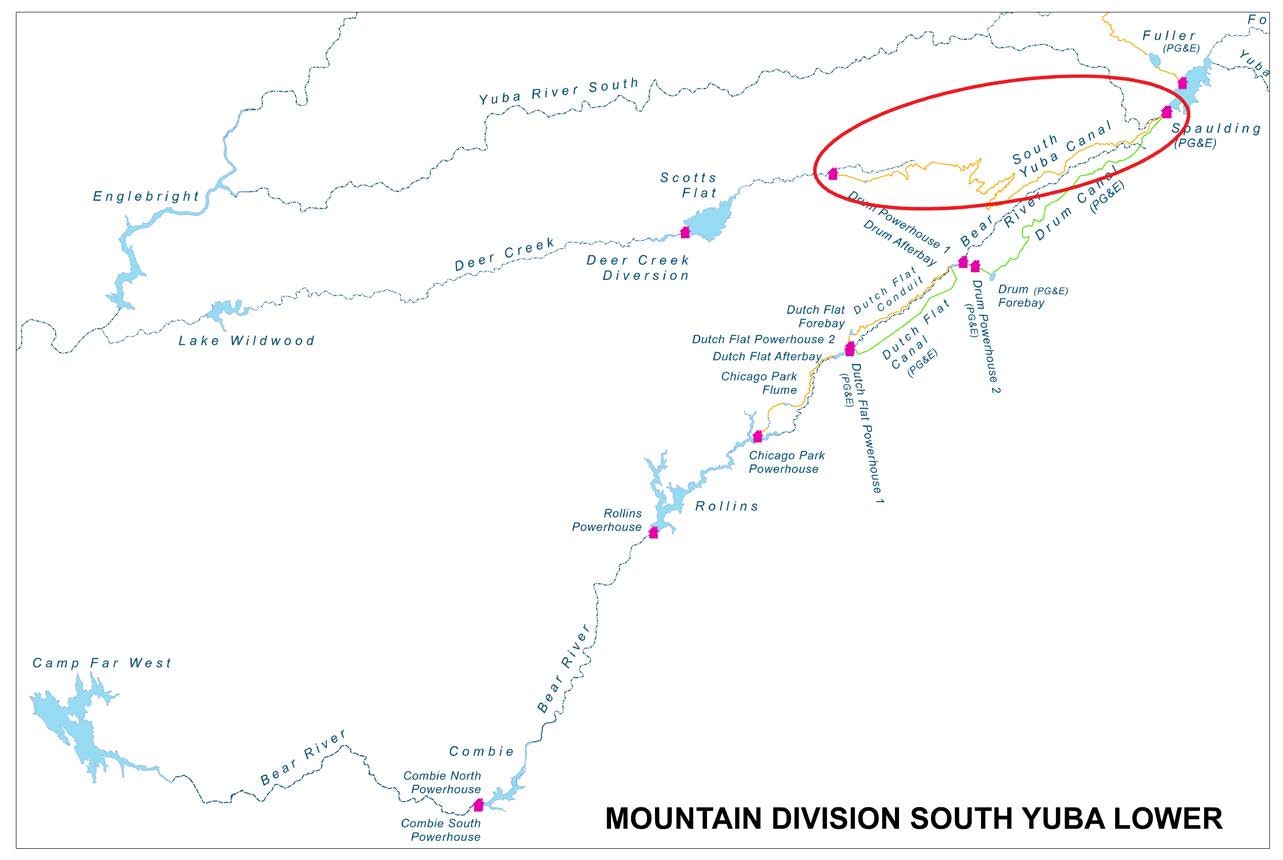
If something fails along the South Yuba Canal, there are limited options to move water another way. That makes reliability dependent on constant maintenance, monitoring, and rapid response in the field.
This isn’t optional work. It’s essential.
Still Delivering Today
Originally built in the 1850s, the canal continues to serve as a key water conveyance route in western Nevada County. What began as a system supporting hydraulic mining has evolved into a critical part of modern water delivery.
Today, it helps:

- Deliver water to homes and businesses
- Support local agriculture
- Move water through an interconnected regional system
Its continued operation reflects decades of investment, upgrades, and daily work.
What It Takes to Keep It Running
Maintaining the canal means working in steep, forested terrain where access is limited and conditions can change quickly.
Crews regularly:

- Inspect and repair canal sections, flumes, and tunnels
- Manage vegetation and erosion risks
- Monitor structural conditions
- Respond to weather, landslides, and falling debris
In some areas, even routine repairs require extraordinary effort.
Materials may be flown in by helicopter.
Crews replace aging structures piece by piece.
Every repair is done with precision to keep water moving safely.
There is no “set it and forget it.”
Reliability requires constant attention.
🎥 "Maintaining the Legacy"
Risk, Terrain, and Modern Challenges
Carved into granite cliffs and narrow canyon walls, the canal faces ongoing risks:
- Wildfire impacts
- Landslides and erosion
- Falling rock and debris
- Limited access for repairs
While parts of the canal date back more than a century, the challenges it faces are entirely modern. Extreme weather, changing conditions, and increasing demand all require active management.
A System with Deep Roots
Constructed between 1853 and 1858, the original canal stretched roughly 16 to 19 miles and included miles of ditch, flume, and tunnels carved through solid rock.
It was one of California’s earliest major water conveyance projects, built under difficult conditions by crews working along steep canyon walls, sometimes suspended by ropes.
That same alignment still carries water today.
Connecting Past to Present
In 2018, the Nevada Irrigation District acquired key portions of the system, ensuring local control and continued investment in its future.
The South Yuba Canal represents something larger:
Infrastructure built with long term vision
and sustained through ongoing care.
Looking Ahead
Maintaining a 100 plus year old system requires daily effort, modern expertise, and forward planning.
With no backup system in place, reliability depends on the work happening every day in the field.
From the air to the ground, maintaining the South Yuba Canal is a continuous effort—and a critical part of delivering water to the communities that depend on it.

A System with Deep Roots
The original canal, constructed between 1853 and 1858, stretched roughly 16 miles and included miles of ditch, flume, and tunnels carved through solid granite.
It was one of the earliest large scale water conveyance systems in California, built under extremely difficult conditions. Workers blasted pathways into cliffs and in some areas worked suspended by ropes to reach the rock face.
That same alignment, engineered more than 150 years ago, still guides water today.
Connecting Past to Present
In 2018, the Nevada Irrigation District acquired key portions of the system, including the canal and related facilities, ensuring local control and continued investment in its future.
The South Yuba Canal remains a clear example of what this system represents:
Infrastructure built with long term vision
and sustained through ongoing care.
Looking Ahead
Maintaining a 100 plus year old system requires more than history. It demands daily work, modern expertise, and forward planning.
As conditions evolve, from climate pressures to increasing demand, the role of infrastructure like the South Yuba Canal remains just as critical today as it was more than a century ago.